
This is a thank-you. It is not a field diary, and it does not invent a person.
There is no named clerk, named school, or quote on this page. What I can write without making one up is the work Education Code 41601 and CDE already put on the calendar.
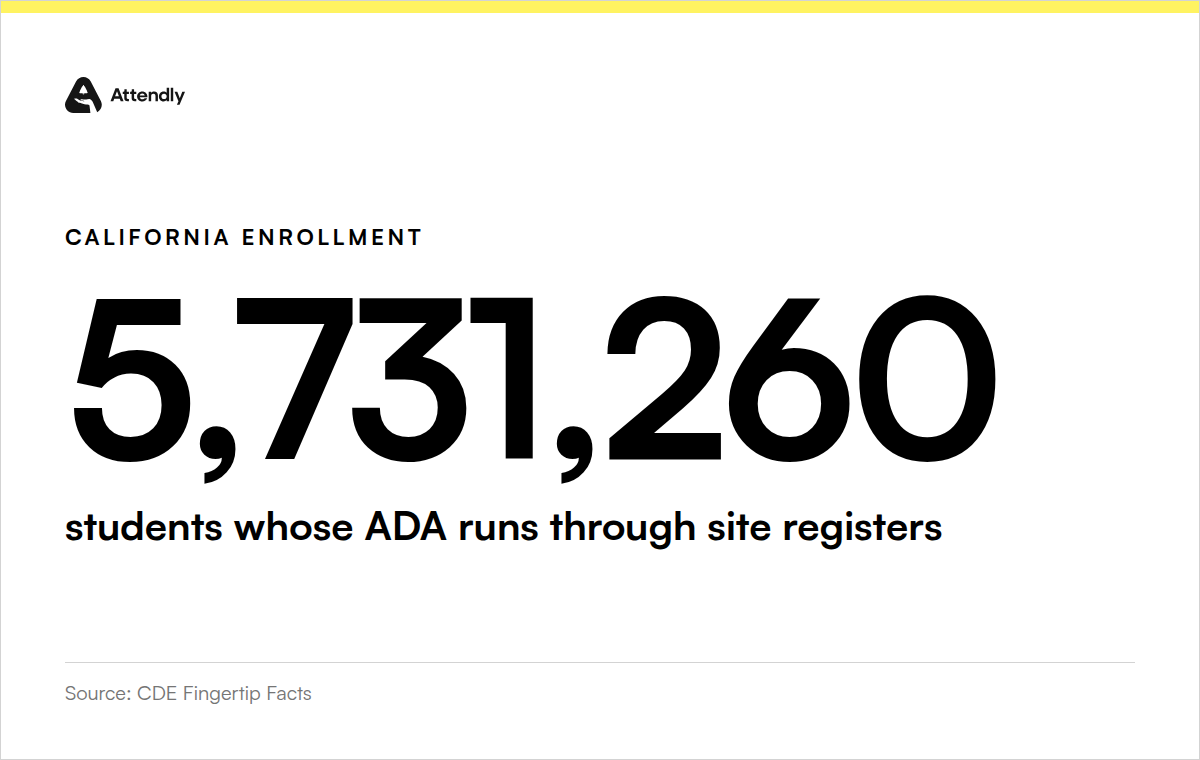
CDE Fingertip Facts count 5,731,260 enrolled students in 1,011 public school districts. Every ADA day that funds through LCFF has to survive a register, a school month, and a reporting period. Someone at a site or a district office does that. We call them clerks, technicians, registrars, or “the person who owns P-2.” The title on the badge changes. The file does not.
What P-2 actually is
Education Code 41601 requires each school district governing board to report average daily attendance for all full school months in two windows. July 1 through December 31 is the first period, P-1. July 1 through April 15 is the second period, P-2.
CDE’s instructional time and attendance accounting page directs the same split in practice. P-2 is all full school months from July 1 through the last school month that ends on or before April 15. A school month for this purpose is four weeks of five days, 20 days, Monday through Friday. It is not a calendar month.
CDE’s Principal Apportionment page is why the second report matters. P-2 supersedes P-1. It is the current-year data CDE uses for the Second Principal Apportionment, which CDE describes as establishing the final state aid payment for the fiscal year in June.
For 2026-27, CDE’s Principal Apportionment deadlines set 3 May 2027 as the due date for P-2 attendance data from all LEAs. The same calendar lists certification of the 2026-27 Second Principal Apportionment on 18 June 2027.
The clerk is not the apportionment. The clerk is the person who still has to make the days in that window true.
What the job looks like
Someone has to keep the school-day register honest. Excused and unexcused both fund at zero for the missed day. CDE and Education Code 48260 still need the unexcused ones counted for truancy. Those are different jobs that share a screen.
Someone has to know which Monday starts a school month, and which Friday in April is the last full month that still belongs to P-2. A late independent study agreement does not become April ADA because someone is in a hurry. Education Code 51747 still wants the written agreement before the program counts. We already walked that line in Short-Term Independent Study in California.
Someone has to keep Attendance Recovery off the ordinary classroom register until the hours, the certificated adult, the ratio, and the assigned absence can be sampled. CDE wants Recovery on its own line in PADC and also inside regular classroom-based ADA so it funds. Education Code 41601(a) tells you not to fold weekend and intersession Recovery days into the ordinary divisor. The Attendance Recovery hub is the longer version of that split.
Someone has to do this while P-2 is still the window that moves money, not the Annual cleanup in July. Absences Aren’t the Biggest Leak. Paperwork Is. was about that folder. This note is about the person holding it.
Why the thank-you belongs here
Boards talk about ADA as if it appears when the bell rings. CDE talks about certifications. Clerks talk about codes that do not match, and a recovered afternoon that never got assigned to a Wednesday.
Your SIS is your system of record. Attendly is your system of action. We read from the SIS. We do not replace the clerk. If the product does not make the next step on that register easier, we built the wrong thing. That is the same rule as Why We Build Workflows, Not Dashboards.
PACE and Attendance Works counted 1,143,668 chronically absent students in 2024-25. Those absences become P-2 math in the same registers. The clerk is the person who has to keep the chronic-absence clock, the truancy clock, and the apportionment clock from pretending they are one column.
So: thank you. For the school months. For the April 15 cutoff. For the May file. For refusing to invent a day that the statute would not survive.
If the leak in your district is that file, let’s talk. Sit with the team that builds the next step. Bring the clerk if you can. They already know where P-2 actually lives.
Sources
Where Attendly fits
Let's talk
If this is the leak in your district, sit down with the team that builds the workflow.
Let's talk